
When Courts Step Back: A Landmark Push for Arbitration Autonomy

Presented by: Ms. Shrishty

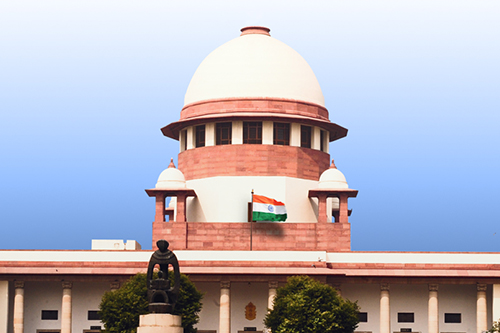
In a significant boost to India’s arbitration landscape, Hindustan Construction Company Ltd.
v. National Highways Authority of India, (2024) 2 SCC 613
, decided on 24 August 2023 by the
Hon’ble Supreme Court of India reaffirms a crucial principle that courts must not overstep into
the domain of arbitral decision-making. The case arose from a contractual dispute over
measurement methods in a highway project, eventually escalating from a Dispute Resolution
Board to arbitration, and then into prolonged judicial scrutiny.
At the heart of the ruling lies a simple but powerful idea: arbitral awards, especially those
delivered by expert tribunals, deserve deference. The Supreme Court emphasized that under
Section 34 of the Arbitration and Conciliation Act, judicial review is limited. Courts are not
meant to re-interpret contracts or substitute their own reasoning unless the award is patently
illegal or fundamentally flawed.
Equally important was the Court’s clarity on dissenting opinions. While dissent adds depth and
transparency to arbitral reasoning, it does not carry the weight of an enforceable award.
Elevating minority opinions to that status, the Court warned, would disrupt the certainty and
finality arbitration seeks to provide.
What makes this judgment particularly relevant is its recognition of technical expertise. By
trusting tribunals composed of domain specialists, the Court reinforces arbitration as a practical
and efficient dispute resolution mechanism especially in complex infrastructure and
commercial matters.
Thus, this decision strengthens confidence in arbitration by preserving its core values: finality,
expertise, and minimal judicial interference. For businesses and practitioners alike, it sends a
clear message, arbitration is not just an alternative to litigation; it is a system the courts are
committed to protecting.

Read More

India Suspends the Indus Waters Treaty — But Can a CountryLegally Walk Away from a 65-Year-Old Pact?

Presented by: Mr. Arpit

After the horrific Pahalgam terror attack of April 2025, India put the world’s most celebrated
water-sharing treaty “in abeyance.” Here is what international law actually says about that
decision.

Every Indian knows the Pahalgam attack of 22 April 2025, where 26 innocent tourists killed in
Kashmir in one of the deadliest attacks on civilians in decades. What followed in the legal
world was equally significant: India announced it was holding the Indus Waters Treaty (IWT)
of 1960, a 65-year-old water-sharing agreement between India and Pakistan “in abeyance.” But
did India have the legal right to do this?
The IWT, signed by Prime Minister Jawaharlal Nehru and President Ayub Khan under World
Bank mediation, allocates the six rivers of the Indus Basin between the two countries.
Remarkably, it had survived four wars and decades of hostility, widely regarded as the world’s
most resilient transboundary water treaty. Crucially, however, the treaty contains no exit
clause and no provision for unilateral suspension.
Under international law, the Latin maxim Pacta Sunt Servanda — “agreements must be kept”
is the bedrock principle of treaty law. A country cannot simply step away from a binding treaty
because of political displeasure.

Under the Vienna Convention on the Law of Treaties, suspension of a treaty is only permissible
on two narrow grounds: a material breach by the other party (Article 60), or a fundamental
change of circumstances (Article 62). India, though not a signatory to the Convention, is still
bound by these principles as they reflect customary international law. India has deliberately
used the phrase “held in abeyance” rather than “suspended” precisely to sidestep these legal
thresholds.
The lesson for every citizen: treaties are not just political documents. they are binding legal
obligations. When nations treat water as a weapon, it is international law that stands as the last
line of accountability.

Read More

Legal Disclaimer

The rules of the Bar Council of India prohibit soliciting or advertising. This website is for informational purposes only and does not constitute legal advice. Visiting this site or contacting us does not establish a client-attorney relationship.